Clocked cars: Is your next car hiding its true mileage?
A low-mileage used car can look like the safer choice. Less wear, fewer repairs and better resale value.
But only if the number on the dashboard is telling the truth.
New research has revealed which popular used cars are most frequently found with mileage discrepancies. It has also highlighted a more sophisticated form of clocking, where technology prevents some journeys from being recorded at all.
When the mileage does not add up
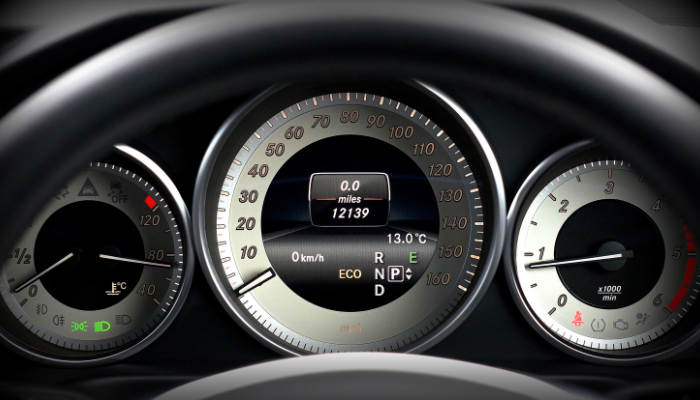
A mileage discrepancy means the figures recorded against a car do not tell a consistent story. A newer MOT test might show fewer miles than an earlier one, or the mileage may appear unusually low compared with its service history and condition.
There can be an innocent explanation, such as a recording error or a replacement instrument panel. But it can also indicate clocking, where the displayed mileage has been reduced or prevented from increasing.
Britain’s most commonly clocked cars
The Nissan Qashqai was the model most frequently found with a mileage discrepancy among the vehicles checked during the first half of 2026.
Around 10.8% of the Qashqais analysed showed a mileage discrepancy, followed by the Skoda Octavia at 8.2% and the Audi Q5 at 8.1%.
| Rank | Make and Model | Checks showing a discrepency | Average mileage removed |
| 1 | Nissan Qashqai | 10.8% | 12,250 miles |
| 2 | Skoda Octavia | 8.2% | 17,859 miles |
| 3 | Audi Q5 | 8.1% | 18,452 miles |
| 4 | Audi A6 | 7.4% | 21,511 miles |
| 5 | Land Rover Defender | 7.0% | 51,237 miles |
| 6 | Audi Q7 | 6.2% | 19,412 miles |
| 7 | Audi A5 | 5.9% | 22,482 miles |
| 8 | Audi A3 | 5.5% | 17,995 miles |
| 9 | Range Rover | 5.2% | 26,006 miles |
| 10 | Vauxhall Astra | 5.1% | 26,150 miles |
The scale of the reductions is even more concerning. Affected Land Rover Defenders had lost an average of more than 51,000 miles, potentially disguising several additional years of use.
These findings relate only to the vehicles included in the analysis, not every example on UK roads. Seeing your car on the list does not mean it has been clocked, but it is a reminder that mileage should always be checked.
Clocking has gone digital
Modern dashboards may look harder to tamper with, but mileage fraud has evolved with them.
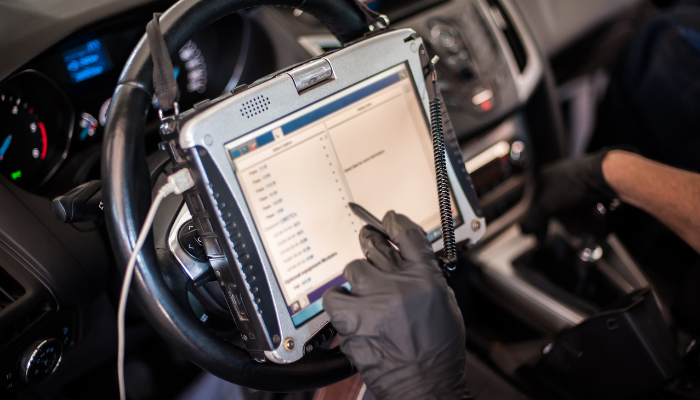
So-called mileage blockers can interfere with the information a car uses to record distance while it is being driven. Rather than removing miles afterwards, they can prevent some of those miles from appearing in the first place.
This can make fraud harder to spot. An MOT history may not show the mileage falling because the missing journeys were never added to the dashboard reading.
That does not necessarily make the technology undetectable. Service records, invoices, vehicle data and signs of physical wear can still reveal a story that does not add up. Buyers simply need to look beyond one number.
That leaves buyers at risk of judging a car’s price, condition and maintenance needs using mileage that may be incomplete.
Buyers simply need to look beyond one number.
Mileage affects much more than a car’s asking price. It helps determine when a car should be serviced, what maintenance it may need and how much life could remain in major components.
If thousands of miles are missing, you could be:
- Paying a low-mileage price for a heavily used car
- Missing important servicing or maintenance
- Closer to replacing brakes, suspension, a clutch or gearbox
- Left with a lower valuation when you sell the car
- Buying years of wear that have been hidden from you
The odometer may have forgotten those journeys, but the engine, tyres and suspension have not.
How to spot a potentially clocked car
No single check can guarantee that a car’s mileage is genuine. Service records, invoices, vehicle data and physical wear can still reveal a story the dashboard is trying to hide.

Check its MOT history
The Government’s free MOT history service shows the mileage recorded at every MOT test.
Look for readings that decrease, rise unusually slowly or do not fit the car’s age. A gap is not proof of clocking, but it deserves an explanation.
Look at the condition
A car showing modest mileage should not look as though it has spent its life on the motorway.
Check the driver’s seat, steering wheel, pedals, gear selector, buttons and door sill. Heavy wear alongside a suspiciously low mileage should prompt further questions.

Read the service records
Service records and repair invoices help build a timeline of the car’s use. Make sure the dates and mileages increase consistently and ask about any unexplained gaps.
If the car has a digital service history, ask to see it rather than relying on the words “full service history” in an advert.
Question unusually low mileage
Low-mileage cars do exist, but the seller should be able to explain the vehicle’s history and support it with paperwork.
A low reading, limited documentation and an unusually attractive price are not reasons to rush. They are reasons to slow down.
Think you've already bought a clocked car?
Make sure to gather as much evidence as possible, including the original advert, invoice, MOT history, service records and any vehicle report showing the discrepancy.
Contact the seller in writing and explain what you have found. Your rights may differ depending on whether you bought from a business or a private seller.
Supplying false mileage may be considered a misleading commercial practice. Depending on the circumstances, you may be entitled to seek a repair, replacement, price reduction or refund. Citizens Advice can provide guidance based on your individual situation.
Private purchases can be harder to resolve, but knowingly misrepresenting a car’s mileage remains a serious matter. Keep your evidence and seek advice before accepting a resolution.

Buy the history, not just the mileage
A well-maintained car with honest mileage and a complete history could be a much better purchase than a lower-mileage example with gaps in its past.
Look beyond the dashboard, check that the records add up and be prepared to walk away if the car’s story does not feel right.
A few checks before buying could save you from overpaying for the car and paying even more to keep it on the road.
Keep your car’s important information together
MotorEasy’s free Digital Garage brings your MOT history, mileage records, servicing details, documents and important motoring dates together in one place. Add your car to keep its history organised and receive reminders when its MOT test, car servicing or road tax is due.