Can You Buy GAP Insurance After You've Bought the Car?
Yes - in many cases, you can still buy GAP insurance after you’ve bought a car, but timing is important.
Most GAP insurance providers allow a window after purchase where cover can still be arranged, even if you didn’t buy from a dealership or alongside your finance agreement. In fact, many drivers choose to wait so they can compare prices, understand the different types of cover available, and decide whether GAP insurance is right for them.
If you’ve recently bought a new or used car, there’s a good chance you’re still eligible. However, GAP insurance can’t usually be added indefinitely. Eligibility windows vary between providers, and the longer you leave it, the fewer options you may have available.
That’s why, if you’re considering protection against depreciation or potential finance shortfalls, it’s usually worth checking your options sooner rather than later.
How long after purchase can you buy GAP Insurance?
Most GAP insurance providers offer a limited window where cover can still be added. The exact timeframe varies, but it’s often based on:
- How many days the vehicle was purchased
- The current mileage
- They type of vehicle or finance agreement involved
As a general rule:
- Recently purchased vehicles with lower mileage usually have the widest range of options
- Older vehicles with higher mileage tend to have fewer options
For example, at MotorEasy we offer three different GAP insurance policies. One is available for vehicles purchased within the last six months, while another is designed specifically for drivers who bought their car more than six months ago.
If you’d like to see which GAP insurance you’d be eligible for, get a quote here.
What affects your eligibility for GAP Insurance after purchase?
Even if you’re still within the typical time window, eligibility for GAP insurance isn’t always guaranteed. Providers look at several factors when deciding whether cover is still available.
- Time limits set by providers
Every provider sets its own eligibility criteria. These limits exist because GAP insurance is designed to protect against depreciation and finance shortfalls from relatively early in a vehicle’s ownership cycle. As time passes, the difference between the car’s original value and its current market value may change making the risk harder to assess. - Vehicle age and mileage
Providers will also consider a car’s age and mileage. Newer vehicles and cars with low mileage will often have more options available. This is because depreciation patterns become less predictable over time, particularly with used vehicle that have already experienced a steep drop in value. - Type of purchase (new, used, finance or lease)
Financed and leased vehicles are particularly suitable for GAP because in the event of a write off, there may still be an outstanding balance owed. New cars tend to have a range of options due to the car’s value being the highest. Used cars can also have options depending on how the vehicle was purchased.
Types of GAP Insurance you can still buy after purchase
- Return to Invoice (RTI)
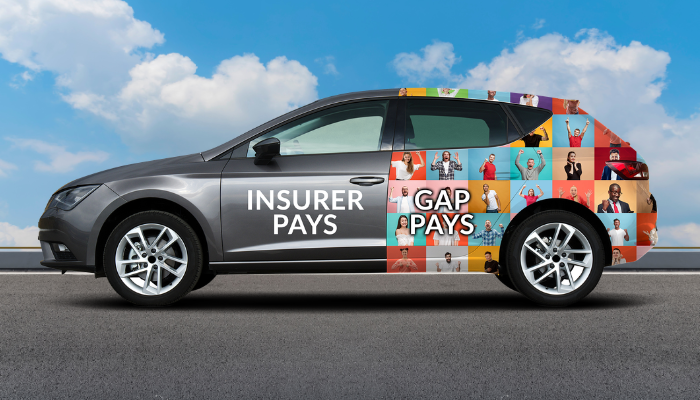
RTI GAP Insurance is designed to cover the difference between your insurer’s payout and the original price you paid for the vehicle. If your insurer declares your vehicle a total loss and only pays its current market value, RTI aims to bridge the gap back to your invoice price. This type of cover is often relevant for newer cars that may lose value quickly in the first years of ownership. - Return to Value (RTV)
RTV GAP Insurance is designed to cover the difference between your insurer’s payout and the value of the vehicle when the policy started. This type of cover is relevant for those who purchased their car more than 6 months ago from a private seller. - Contract Hire & Lease (CHG)
CHG GAP Insurance is designed to cover any outstanding balance on an agreement should your car be written off, it also covers costs towards rental payments, insurance excess and accessories cover. This cover is available for those who’ve purchased their vehicle on a finance or lease agreement.
Is it worth buying GAP Insurance?
Whether GAP insurance is worth buying after purchase depends on your situation and how much you’d be left out of pocket if your car was written off.
It may be sensible if:
- You bought your car recently
- It's on finance or lease agreement
- The vehicle is likely to depreciate quickly
- You'd be out of pocket financially if your insurer's payout was lower than expected
For newer or financed vehicles, GAP insurance can offer reassurance if the car is written off early into ownership. Whereas those who’ve bought their car outright or could comfortably absorb the shortfall themselves may not find it necessary. The choice is ultimately yours.
If you'd like to explore your options, MotorEasy can help.
FAQs
Can you buy GAP insurance after 30 days?
Yes, some providers still offer GAP insurance after 30 days, but eligibility varies. Availability often depends on factors such as the vehicle’s age, mileage and how long ago it was purchased. With MotorEasy, we've go you covered.
Can you get GAP insurance on a used car after purchase?
Yes, some providers offer GAP insurance for used cars after purchase. However, cover options may be more limited compared to newer vehicles, particularly for older or higher-mileage cars.
Does GAP insurance start immediately?
Not always. Some policies include a waiting period before cover begins, while others may start immediately. This can vary between providers, so it’s important to check the policy terms carefully.
Can you add GAP insurance after finance is agreed?
Yes, GAP insurance can often still be added after a finance agreement has been arranged, provided the vehicle still meets the provider’s eligibility criteria.
Is it cheaper to buy GAP insurance after buying a car?
It can be. Many drivers choose to buy GAP insurance after purchasing the car because dealership prices are often higher than policies available from specialist online providers.